How to Learn a Language by Translating Phrases (Not Word Lists)
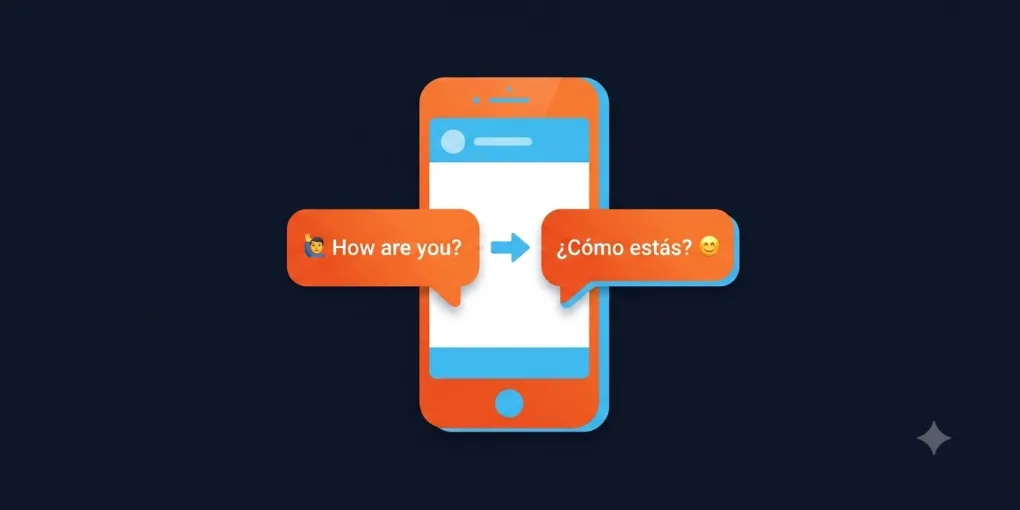
Most people start learning a language the same way: a long list of words to memorize. A month later, they can name twenty fruits but still freeze when someone asks how their weekend was. Phrase-based language learning fixes that by flipping the unit of study — instead of isolated words, you learn and translate whole phrases, the way language is actually used.
This guide explains why translating real sentences works better than word lists, what the research says, and exactly how to build a daily habit around it.
Why word lists fail
Individual words are almost useless on their own. Language lives in combinations — collocations, word order, tiny grammar markers, and tone. When you memorize “weekend,” “your,” and “how,” you still don’t know that a native speaker says “How was your weekend?” and not “How was the weekend of you?”
Word lists also strip away the single most important ingredient for memory: context. Your brain remembers things that connect to other things. A word floating alone has nothing to hold onto. A word inside a phrase you understand has a story, a rhythm, and a situation attached to it — so it sticks.
What “translating phrases” actually trains
When you translate a full phrase from your language into your target language, you exercise several skills at once:
- Vocabulary in context — you learn how words combine, not just what they mean.
- Grammar without grammar drills — word order, verb forms, and agreement come baked into the sentence.
- Active recall — producing the answer yourself is far stronger than recognizing it on a flashcard.
- Real-world readiness — every phrase is something you could actually say.
That last point matters most. The goal of learning a language is to use it, and translating everyday phrases is the closest low-stakes rehearsal for the real thing.
Active recall beats passive review
There’s a well-documented gap between recognizing an answer and generating it. Reading a translation and nodding along feels productive, but it barely moves your ability to speak. Translating a phrase yourself — struggling for a second, then checking — forces retrieval, and retrieval is what strengthens memory. This is also why spaced repetition works so well for language learning: it schedules those retrieval moments right before you’d forget.
How to practice phrase translation every day
You don’t need a perfect system. You need a repeatable one.
- Pick phrases from real life. Sentences you’d actually say this week beat textbook lines about libraries and train stations.
- Translate before you check. Always produce your own answer first, even if you’re unsure. The effort is the point.
- Compare, don’t just correct. When you check the answer, notice why it differs — a missing article, a different verb tense, a more natural word choice.
- Say it out loud. Speaking recruits muscle memory and pronunciation, not just recognition.
- Revisit the ones you missed. The phrases you got wrong are exactly the ones worth repeating tomorrow.
Start with the phrases you’ll actually use
If you’re not sure where to begin, don’t overthink it. Greetings, small talk, ordering food, asking for directions, and describing your day cover an enormous share of real conversations. We put together a starting set in the most useful phrases to learn first.
Fit it to your level
Phrase translation scales with you. A beginner translates “How was your weekend?”; an advanced learner translates a nuanced sentence with idioms and subordinate clauses. The method is the same — only the difficulty changes. If you’re not sure where you stand, our guide to the CEFR levels from A1 to C2 helps you place yourself and pick phrases that stretch you without overwhelming you.
How Phrase Rush uses this method
Phrase Rush is built entirely around phrase-based learning. You get a real, everyday sentence in your own language, you translate it into your target language, and you get instant feedback on your answer. Difficulty adapts from A1 to C2 as you improve, and the phrases you struggle with come back for review — so practice compounds instead of leaking away.
No word lists, no points, no gimmicks — just the one skill that transfers directly to speaking. Start translating on Phrase Rush and see how different it feels after a week.
Frequently asked questions
Is translating phrases better than immersion?
They’re not rivals. Immersion gives you exposure; phrase translation gives you focused, active practice. Most learners progress fastest by combining both — immersion for input, phrase translation for the retrieval practice that turns input into output.
Won’t translating make me “think in my native language”?
Early on, translating is a scaffold, not a crutch. As phrases become automatic, you stop translating consciously and start producing them directly. The scaffold falls away on its own with enough repetition.
How many phrases should I practice a day?
Consistency beats volume. Ten to twenty focused phrases a day, every day, will outperform a hundred phrases once a week — especially when the ones you miss are scheduled to return.